
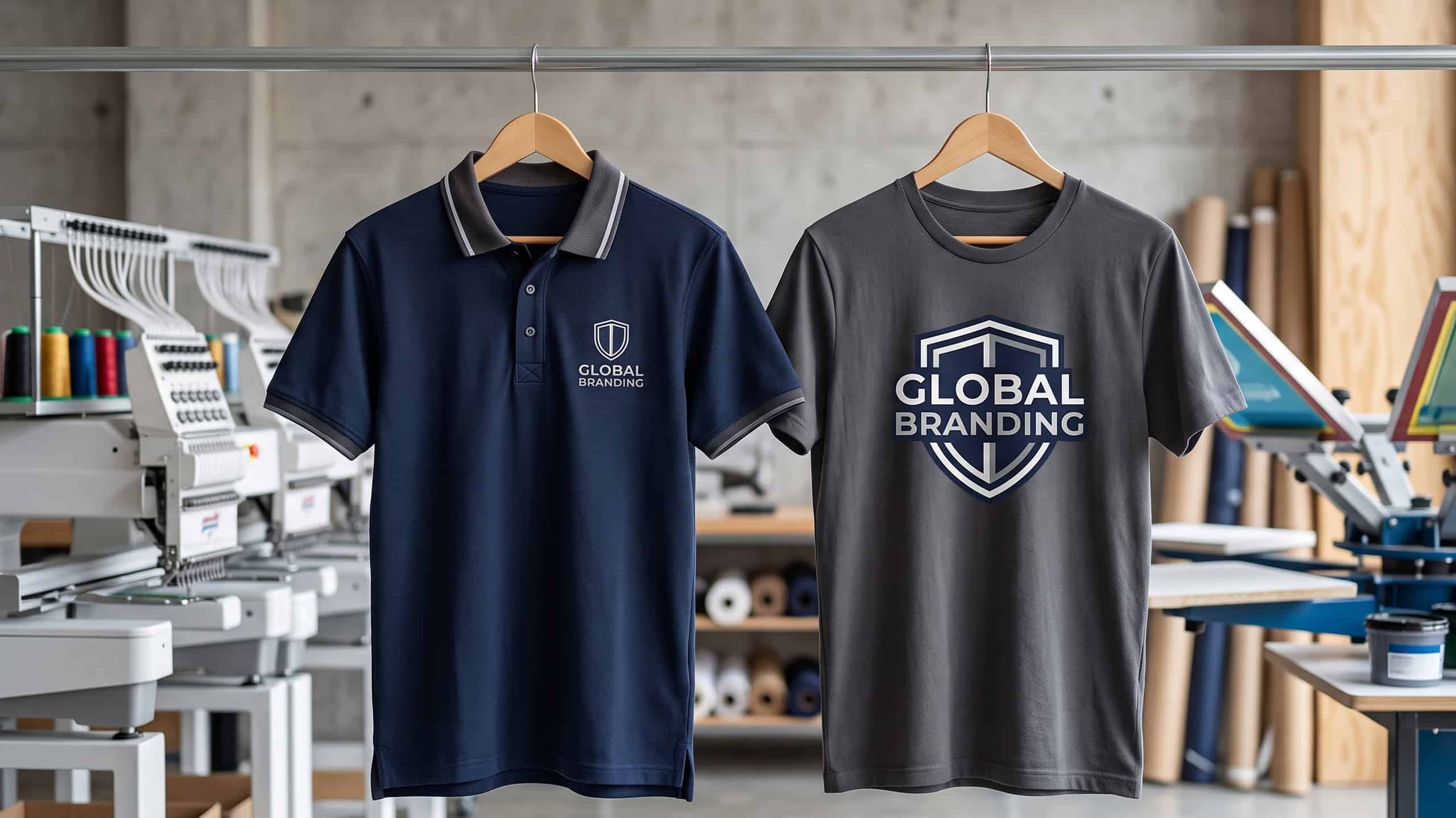
If you're getting branded gear made for the first time, the first decision is usually embroidery or screen printing. Both are good. Both are everywhere. And picking the wrong one for your job is how you end up with a logo that looks cheap, feels wrong, or costs more than it needed to.
After years of doing both across South East Queensland, here's the honest breakdown: what each method actually is, where each one wins, and how to decide for your logo.
What embroidery actually is
Embroidery is your logo stitched into the fabric with thread, using an industrial machine that follows a digital stitch file. That file, made in a step called digitising, tells the machine the exact path, colours and stitch density.
The result is a raised, textured logo that's part of the garment rather than sitting on top of it. It doesn't crack, peel or wash out, and it reads as premium and permanent. That's why it's the default for staff uniforms and corporate wear.
What screen printing actually is
Screen printing pushes ink through a fine mesh stencil (a screen) onto the fabric, one colour at a time. Each colour in your design needs its own screen, which is why simple designs are cheaper to print than complex ones.
Making the screens takes setup time and cost, so screen printing is priced for volume. Once it's set up and running, the per-shirt cost drops quickly, which makes it the cheapest way to print larger runs. The finish is smooth ink on the fabric, and done properly it's durable and holds up to washing.
Where embroidery wins
Embroidery is the better choice when:
- The garment is structured or heavier, like polos, business shirts, jackets, fleece and caps. Thread sits beautifully on these.
- You want a premium, established look. A stitched logo signals a business that's been around and takes itself seriously.
- Durability matters most. Workwear, uniforms and anything washed constantly benefits from stitching that won't crack.
- The logo is simple and not too small. A clean chest logo embroiders perfectly.
Embroidery struggles with very fine text, photographic images and colour gradients. Those details can get lost in thread, so if your logo has any of them, we'd usually steer you toward print.
Where screen printing wins
Screen printing is the better choice when:
- You're printing a lot of t-shirts with a simple design. The more you print, the cheaper each shirt gets.
- The design is bold or large, like a big back print or a chest graphic. Print handles size that embroidery can't.
- You want a soft, flat finish rather than a raised, textured one.
- The budget per unit is tight on a big run of basic tees.
Screen printing is less economical for small runs, because the setup cost has to spread across the order. For a handful of shirts with a detailed design, another print method (DTF) usually beats it.
The cost difference, explained
The two methods are priced differently, which trips people up.
Embroidery is priced on a one-off digitising setup for your logo, then a per-garment cost based on stitch count. A simple chest logo is a low stitch count and good value across a batch. Reorders skip the setup entirely.
Screen printing is priced on a per-colour screen setup, then a per-shirt cost that drops as the quantity rises. Few colours and high volume is where it's cheapest.
The upshot: for a run of staff polos with a simple logo, embroidery is often excellent value, especially with reorders. For 100 event tees with a two-colour design, screen printing usually wins on price.
Common mistakes to avoid
Choosing print for a premium uniform. A printed logo on a corporate polo can look cheap and may crack over time. Embroidery suits uniforms better.
Choosing embroidery for a detailed or photographic logo. Fine detail gets lost in thread. If your logo is complex, print it.
Ordering a tiny screen-print run. The setup cost makes small screen-print orders expensive per shirt. For small numbers, ask about DTF instead.
Not asking about both. A good decorator will quote both methods if it helps you decide, rather than pushing whichever is easiest for them.
A quick decision guide
- Polos, jackets, caps, corporate wear, workwear → embroidery
- Large runs of simple t-shirts → screen printing
- Small runs or full-colour, detailed designs → DTF (not covered here, but worth asking about)
- Mixed job, like a stitched chest and a printed back → both
Plenty of the best-looking gear uses both methods on the one garment. There's no rule that says you have to pick just one.
Best practice: match the method to the job
The right question isn't "which is better", it's "which is better for this garment, this design and this quantity". Embroidery and screen printing both do a job brilliantly, and both do the other's job poorly. A decorator who does both will recommend based on your job, not on the machine they'd rather run.
If you're unsure, describe your logo, the garment and roughly how many you need, and ask for a recommendation. Send the artwork too, because whether your logo suits embroidery often comes down to how fine the detail is.