
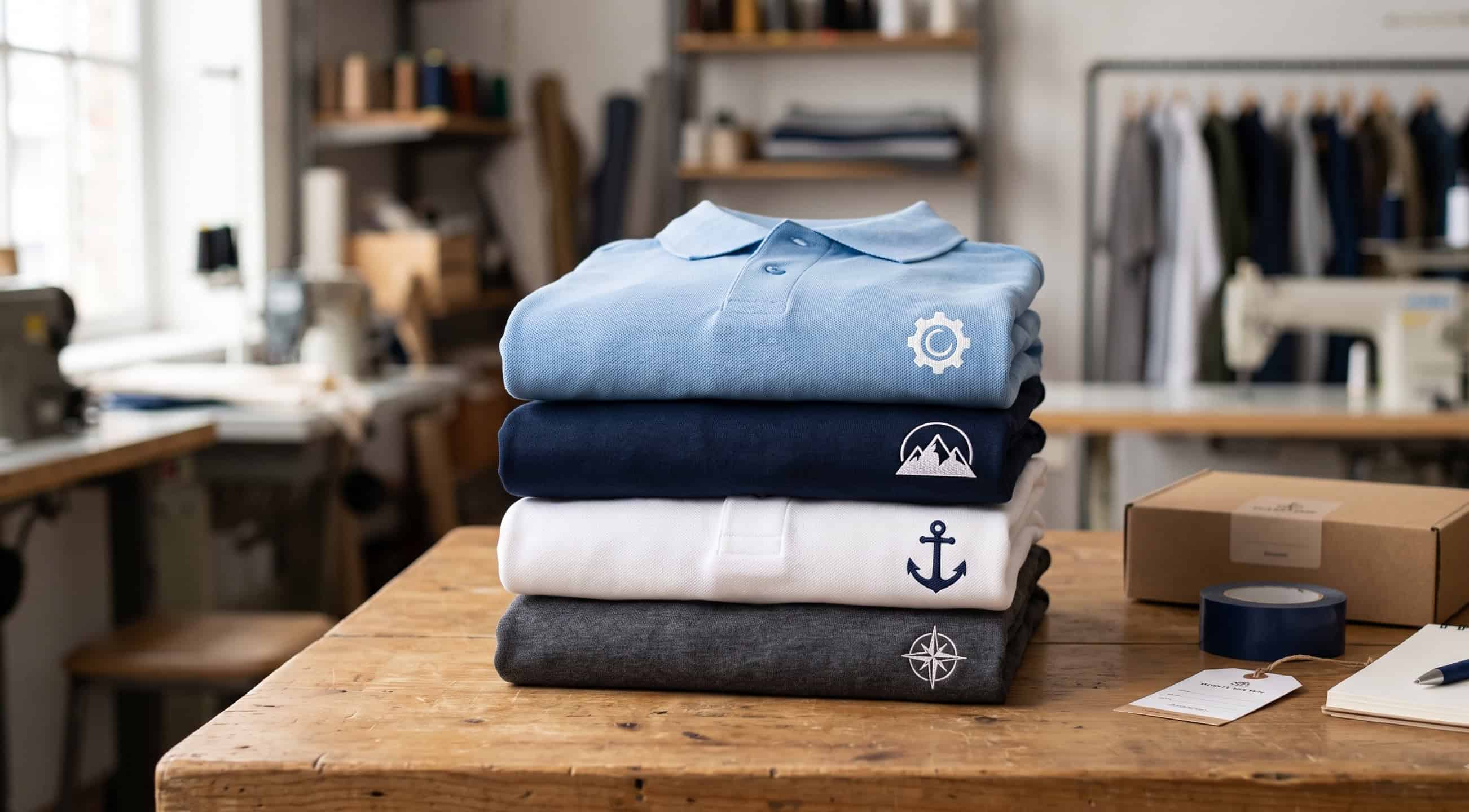
If you've ever asked for "just a few" printed shirts and been quoted a minimum of 20 or more, you've run into MOQs. They can be frustrating when you only want a handful, but they're not arbitrary. Once you understand why they exist, you can work around them and pick the method that suits the quantity you actually need.
Here's a plain guide to minimum order quantities and how to get what you want without overordering.
What a minimum order quantity is
A minimum order quantity is simply the fewest items a decorator will make in one order for a particular method or garment. Below that number, either the job isn't offered, or the per-unit price climbs steeply.
MOQs vary by decoration method, by garment, and sometimes by supplier stock. The key thing to understand is that they're driven mostly by setup costs.
Why MOQs exist: it's about setup
Most decoration methods have a setup step that costs the same whether you make one item or a hundred. The minimum exists so that setup cost is spread across enough units to make the job viable and the per-item price sensible.
Think of it this way: if a method needs an hour of setup before the first item, making a single item means that whole hour sits on one unit. Spread it across 30 units and it barely registers per item. The MOQ is where that maths starts to work.
MOQs by method
Embroidery: low or no minimum. Embroidery's setup is a one-off digitising of your logo. After that, each garment is stitched independently, so there's no per-order setup that forces a big minimum. This is why you can often order a single embroidered polo. It's the most small-order-friendly method there is.
Screen printing: higher minimum. Screen printing needs a screen made for each colour in your design, every order. That setup cost is significant, so screen printing carries a higher minimum to make it worthwhile. Below the minimum, the per-shirt price climbs fast.
DTF: low minimum. DTF prints your design onto film with no per-colour setup, so small runs are affordable. It's the go-to for small quantities of a printed, full-colour design.
Sublimation: varies. Often used for team uniforms, sublimation can have a minimum depending on the garment and job, since custom-cut strip has its own production requirements.
How to work with (or around) MOQs
Match the method to your quantity. This is the big one. If you only want a few printed shirts, don't force screen printing. Ask about DTF or embroidery instead, both handle small runs well. The "minimum" that seemed like a wall often disappears when you switch to the right method for the quantity.
Combine into one order. If you're near a minimum, adding a few extras (spares, or gear for upcoming staff) can get you over the line and lower your per-unit price. Spare shirts rarely go to waste.
Group your designs sensibly. Ordering everything with the same logo in one go spreads setup across more items than splitting it into several small orders.
Plan reorders around the setup. With embroidery especially, once your logo is set up, reorders skip the setup, so small top-ups later are easy and economical.
When a higher minimum is actually worth it
Sometimes hitting a minimum is the smart move, not a compromise. If screen printing's minimum feels high but you genuinely need a lot of shirts, the per-unit price at that volume is usually the cheapest you'll find. Ordering up to a price break can cost barely more in total while giving you more shirts. Ask where the breaks fall before you decide.
Common mistakes
Forcing the wrong method for a small run. Asking for a handful of screen-printed shirts leads to a high per-shirt price. Use DTF or embroidery for small numbers.
Splitting one job into several tiny orders. You pay setup or minimums multiple times. Combine where you can.
Overordering to hit a minimum you don't need. If the method's wrong, switching methods beats buying shirts you'll never use.
Not asking about alternatives. A good decorator will offer a method that suits your quantity rather than just quoting the minimum on the method you happened to ask about.
A quick guide to small orders
- Want 1 to 10 branded polos or shirts → embroidery
- Want a small run of full-colour printed tees → DTF
- Want a large run of simple printed tees → screen printing (its minimum is easy to clear)
- Want team sports strip → sublimation (ask about the minimum for the garment)