
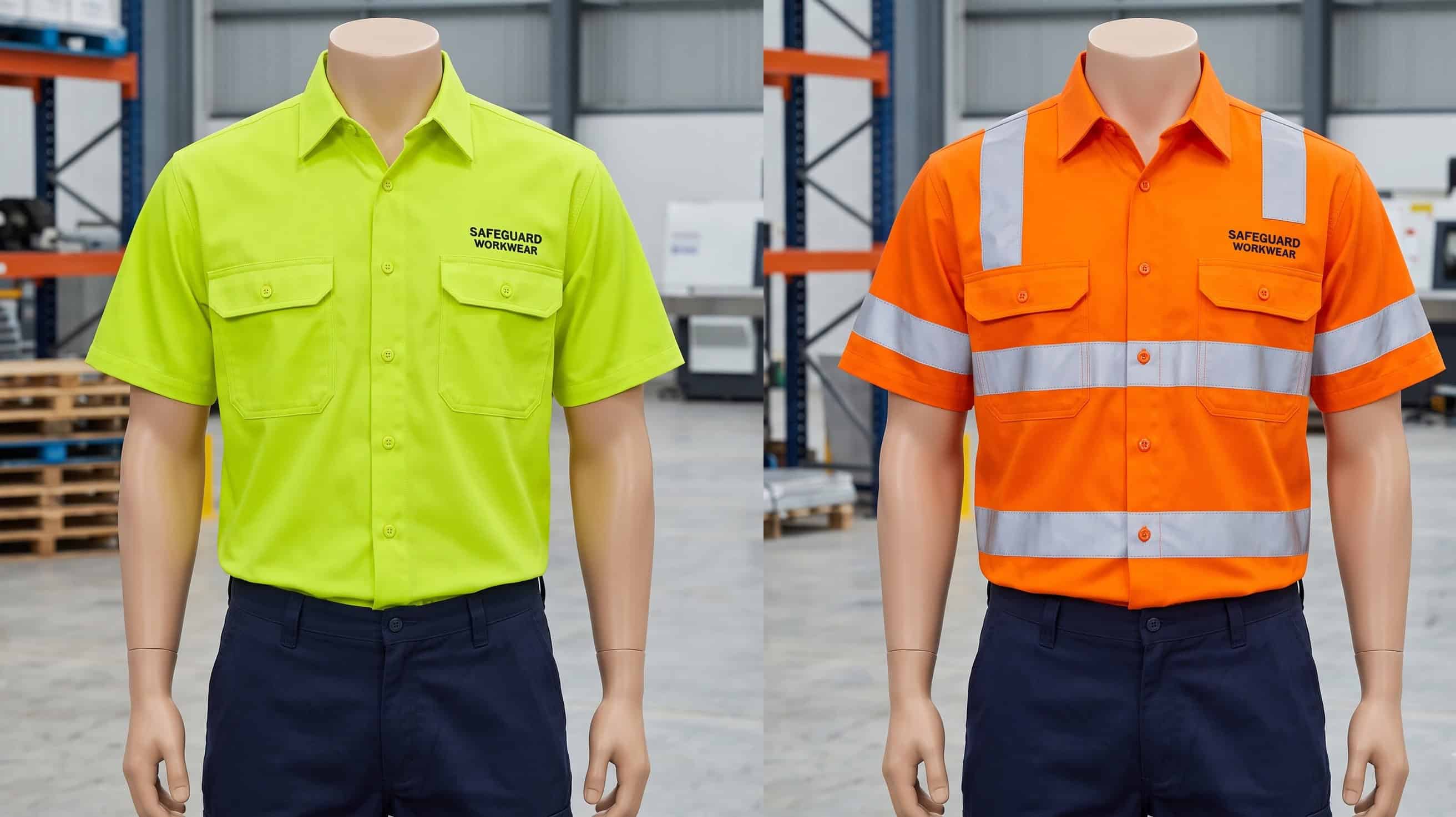
Hi-vis is safety equipment first and a uniform second. Get it right and your crew is seen and protected and your gear passes on site. Get it wrong, whether by buying the wrong rating or by branding it badly, and you can end up with non-compliant gear that fails an inspection or, worse, doesn't keep someone safe. Here's what businesses need to understand.
What hi-vis compliance means
High-visibility clothing works by making the wearer stand out against their surroundings, so they're seen by drivers, machine operators and other workers. In Australia, the relevant standard for high-visibility garments is generally AS/NZS 4602.1, which sets out the requirements garments must meet to be considered compliant.
Compliance isn't just about the colour being bright. It's about the garment having enough fluoro material, and where required, enough reflective tape arranged correctly, to do its job. That's why you can't simply call any yellow shirt "hi-vis".
Day use vs day/night: the key distinction
The most important thing to understand is the difference between day-use and day/night garments.
Day-use hi-vis relies on fluoro fabric (usually yellow or orange) that stands out in daylight. It's intended for work carried out in daylight hours. It does not provide the same visibility in low light or in headlights, because it has no reflective element.
Day/night hi-vis adds retroreflective tape to the fluoro fabric. The tape bounces light back toward its source, so the wearer is visible in low light and when caught in vehicle headlights. This is what's needed for work in low light, at night, in tunnels, or wherever visibility in the dark matters.
Choosing between them comes down to when and where your crew works. If there's any chance of low-light or night work, day/night is the safer choice, but always check what your site and your industry require.
Where the reflective tape goes matters
On day/night garments, the arrangement of the reflective tape is part of what makes the garment compliant. The tape is positioned to give a recognisable outline of the wearer, which is why compliant garments have tape in specific configurations rather than random placement.
This is relevant to branding, which we'll get to, because covering or interrupting that tape can compromise the garment's compliance.
Branding hi-vis without breaking compliance
This is where a lot of businesses unknowingly go wrong. You can brand hi-vis, and most crews want their logo on it, but the branding must not reduce the compliant areas. That means:
- A logo can't cover or significantly reduce the fluoro background area needed for compliance.
- A logo can't sit over or interrupt the reflective tape on day/night garments.
- Branding is placed in positions (like a chest logo and a name) that leave the compliant elements intact.
An experienced decorator understands these placements and will position your logo so the garment still meets the standard. This is a genuine reason to use someone who works with hi-vis regularly rather than treating it like any other shirt. If in doubt, confirm the finished garment still meets the standard for your requirements.
Choosing hi-vis for Queensland conditions
Compliance is the baseline, but comfort keeps gear being worn. In South East Queensland's heat and humidity, that means:
- Vented, breathable fabrics that keep crews cooler while still meeting the standard. Some modern ranges are designed specifically for hot climates.
- Lightweight compliant options for summer work.
- The right layers for cold early starts, including compliant hi-vis jackets and fleece for low-light winter work.
Gear that's compliant but unbearable in the heat gets left in the ute, which helps no one. The best choice meets the standard and suits the conditions.
Common hi-vis mistakes
Assuming any bright shirt is compliant. Colour alone doesn't make hi-vis compliant. The garment has to meet the standard's requirements.
Using day-use gear for night work. Without reflective tape, day-use hi-vis doesn't provide low-light visibility. Night and low-light work needs day/night garments.
Branding over the reflective tape or fluoro area. This can make a compliant garment non-compliant. Placement matters.
Not checking site-specific requirements. Sites and industries can have their own rules on top of the standard. Always check what your specific workplace requires.
Letting compliance lapse. Reflective tape and fabric degrade with heavy wear and washing. Worn-out hi-vis may no longer perform as intended and should be replaced.
A practical checklist
1. Confirm whether your work needs day-use or day/night hi-vis (check your site and industry rules). 2. Choose garments that meet the current relevant standard for your requirements. 3. Pick fabrics suited to the conditions, vented for the heat. 4. Have branding placed so it doesn't reduce fluoro or cover reflective tape. 5. Replace worn hi-vis before the reflective and fluoro elements degrade. 6. When unsure, confirm requirements with the standard, your site and a WHS adviser.